In This Article
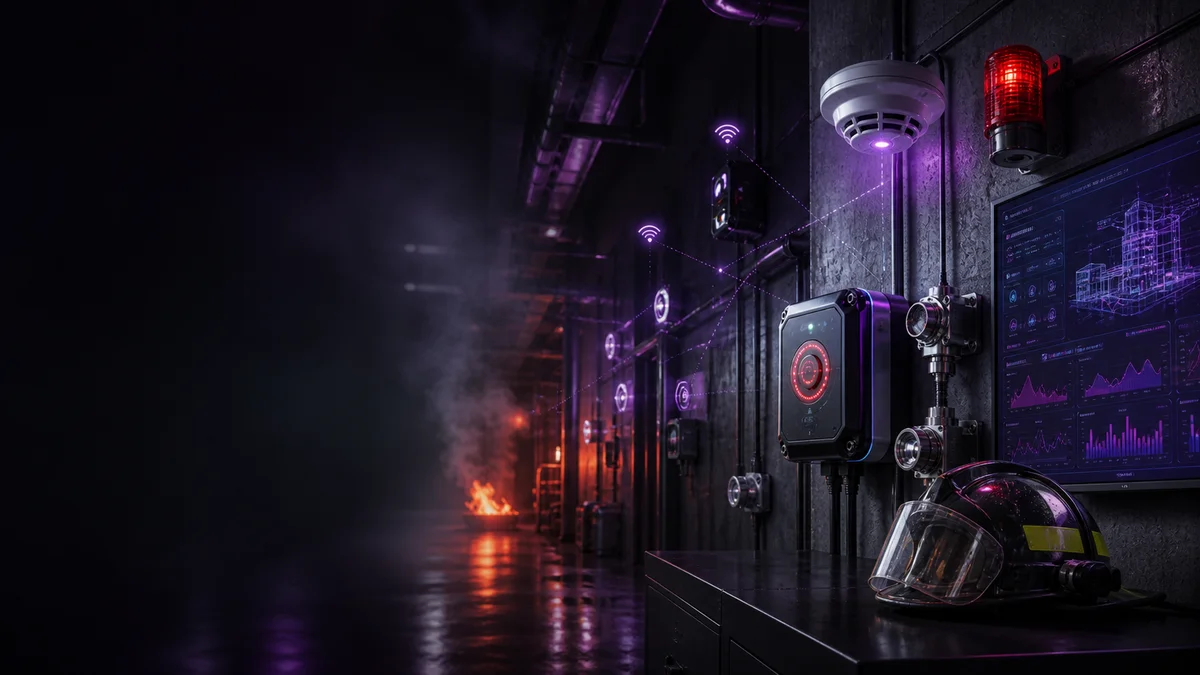
Late fire detection is one of the biggest factors behind the loss of life and property in fire incidents. Building more fire stations alone doesn't solve this challenge; what actually makes the difference is smart, up-to-date data and precise knowledge of an incident's location in the shortest possible time. By connecting smoke, heat and gas sensors to a single integrated cloud platform, IoT enables early fire detection, automatic notification of the fire department, and smart management of emergency-response operations. This article covers the components of a smart firefighting system and the role of AI in this field.
Key Takeaways
- Instant fire detection with smoke, heat, flame and carbon-monoxide sensors
- Automatic notification of the exact fire location to the fire department, with no citizen phone call needed
- AI assistance in reducing false alarms and improving firefighters' situational awareness
- Remote, preventive monitoring and maintenance of equipment to ensure it's always ready to work
The Challenge of Late Fire Detection
In many fire incidents, the time gap between when a fire starts and when the fire department is notified is what determines the extent of the damage. The traditional method requires a citizen to first notice the fire and then call the fire department — a process that takes several minutes even in the best case. If the fire-alarm system is connected directly to the fire command center, the very instant a sensor triggers, the command center's panel lights up and the exact incident location is displayed — eliminating the citizen phone call entirely.
On top of that, continuous monitoring of fire-alarm equipment health by the IoT cloud platform means any system fault or failure is caught and fixed before an incident ever occurs.
Components of a Smart Fire-Alarm System
A complete fire-alarm system is made up of several core parts, each playing a specific role in detecting and reporting a fire.
- A fire-alarm control center for managing the system's inputs and outputs
- Various smoke, heat, flame and gas sensors and detectors for early fire detection
- Manual call points in hallways, exit doors and assembly areas
- Sirens and audible/visual alarm devices for immediate notification
Types of Fire-Alarm Systems
Depending on the type of building and the client's needs, three common types of fire-alarm systems can be used, each with a different method for detecting and reporting the fire's location.
- Conventional fire-alarm system: divides the building into zones and triggers a zone-wide or building-wide alarm
- Wireless fire-alarm system: transmits signals over radio waves with no cabling required
- Addressable fire-alarm system: assigns a unique code to each sensor to pinpoint the exact incident location
The Role of AI & Firefighter Gadgets
By analyzing data from thermal cameras, satellite imagery and firefighters' wearable sensors, AI helps reduce false alarms and predict how a fire will spread. Sensors built into firefighters' gear can relay each responder's exact position, ambient temperature and hazardous-gas concentration to the control center in real time, so the command team can make safer decisions.
- Tracking firefighter locations with GPS and digital positioning sensors
- Detecting hazardous chemicals and toxic gases at the scene
- Monitoring the temperature of different areas of a building to guide the response team more safely
Remote Monitoring & Maintenance
One of the key features of smart firefighting systems is the ability to remotely monitor and perform preventive maintenance on equipment. This gives managers and residents confidence that smoke detectors and fire alarms are continuously in proper working condition, without needing frequent in-person inspections. By designing a comprehensive, home-grown IoT platform for smart firefighting, DanialMoj implements these capabilities to fit the real needs of each building or organization.
Frequently Asked Questions
How exactly does a smart fire-alarm system work?
What's the difference between conventional, wireless and addressable fire-alarm systems?
How does AI help firefighting operations?
Does a smart firefighting system require changing a building's infrastructure?
Want to find out how DanialMoj's smart firefighting system can be designed for your building or organization?
Request a Free ConsultationRelated Articles

Smart Hospital
The role of Industrial IoT in monitoring medical equipment and managing hospital energy use.
Read Article
Smart City
Integrating urban infrastructure with IIoT platforms for better management of city resources and services.
Read Article
Smart Hotel Management
The role of IoT in improving guest experience, safety and energy management in smart hotels.
Read Article
Smart Shrine
Smartification solutions for crowd management, safety and energy use at high-traffic religious sites.
Read Article